No products in the cart.
 isaiahvictor674@gmail.com

15 Genius Ways to Decorate Entryways That Open Into the Living Room — No Foyer Needed
Your front door swings open — and boom, you’re standing right in the middle of your living room. No buffer. No foyer. Just awkward.
Here’s how real homeowners are turning that exact situation into their home’s best design moment.
If your entryway opens straight into your living room, you already know the daily frustration — shoes piling up by the door, guests walking in with nowhere to set their bags, and zero visual separation between the outside world and your cozy inner life. You’ve scrolled through Pinterest wondering why nobody ever shows a realistic solution for this exact layout. Well, you’re in the right place.
This isn’t a post about building a full mudroom addition. These are 15 smart, budget-conscious, actually-achievable design moves that will transform entryways that open into the living room into intentional, beautiful spaces — whether you’re renting a small apartment, living in an older bungalow with no foyer, or just finally tackling the spot that’s been driving you crazy. From layered rugs and console table styling to room dividers and vertical wall panels, there’s an idea here for every square foot and every budget.
30 Stunning Entryways With Benches That Make Every Guest Stop and Stare
✦ Why You’ll Love These Ideas
No construction, no permits, no contractor — just smart styling that works in real homes with real budgets.
Each idea works year-round AND can be refreshed seasonally for evergreen Pinterest traffic.
Every trick doubles as functional storage — because a pretty entryway that can’t hold your keys is just art.
🏠 Want 200+ Room-by-Room Decor Ideas In One Place?
Don’t lose these ideas. Get THE ALL-IN-ONE HOME DECOR BIBLE — 200+ transformations, hacks, and room-by-room guides for every space in your home. This ebook is exactly what renters, first-time homeowners, and decor lovers have been waiting for. Spots are going fast.
🛒 Amazon Find: A slim Narrow Console Table is the #1 tool to create a defined entryway zone — without eating up a single extra inch of floor space. Order one and transform the spot in a weekend.
The Problem Nobody Warns You About (And What Actually Fixes It)
Let’s be real — most of the entryway content floating around Pinterest assumes you have a dedicated foyer. A hallway. At least a little wall space framing the door. But millions of American homes — from 1960s ranch houses to modern open-concept apartments — have a front door that opens immediately into the main living area. And the builders who designed it that way never considered that you’d need somewhere to drop your keys, sit while you wrestle off your boots, or just have two seconds of transition before you’re fully “home.”
The great news? Interior designers have been solving this problem for decades, and the solutions are surprisingly accessible. The secret is not to fight the open layout — it’s to use design intention to signal zones without building a single wall. Let’s get into it.

A well-placed area rug and console table create an instant entryway zone — no walls required.
📋 Before You Start
Measure your door swing. Know exactly how much clearance you have. Most interior doors need 30–36 inches to open fully — that’s your sacred zone.
Map your traffic flow. Where do people naturally walk first? Design around that natural path, not against it.
Pick one anchor piece first. A rug, a console table, or a room divider — choose your hero, then build outward from there.
Idea No. 01
Use a Double Rug Layer to Signal “Entry Zone”
Place a smaller doormat or flat-weave rug right at the entry point, then anchor the living room seating with a larger area rug. The visual separation created by two different rugs — even without furniture between them — tells every eye in the room that these are two distinct spaces. Go for a jute or sisal rug at the door (durable, easy to clean) and a plush, patterned area rug for the living room side. This works especially well in small open-plan spaces where you can’t place large furniture as a divider.
🛒 Amazon Find: This Natural Jute Entry Rug is flat-weave, wipes clean instantly, and looks like it came straight off a designer mood board — under $60.
Idea No. 02
Back the Sofa Up to the Door (Yes, Really)
One of the most counter-intuitive — and most effective — tricks for entryways that open into the living room is positioning the sofa with its back toward the front door. Instead of “blocking” the room, the sofa’s back naturally creates a mini-hallway feel and gives guests a clear sense of transition from entry to living space. It’s perfectly acceptable to walk into a home and see the back of a couch. If anything, it reads as intentional and pulled-together. Style the sofa back with a cozy throw and a tray of small decor to make it a feature, not an afterthought.
Idea No. 03
A Console Table Behind the Sofa = A Hidden Genius Move
Pair your backward-facing sofa with a slim console table tucked right behind it — between the sofa back and the front door area. This console becomes your entryway command center: a bowl for keys, a small lamp for ambiance, hooks nearby for bags, maybe a small tray for mail. You’ve effectively created a foyer vignette using furniture you probably already own. How to Style a Console Table for Maximum Impact is a great guide if you want to go deeper on that styling.
🛒 Amazon Find: A Narrow Sofa Table (under 15″ deep) fits perfectly in the 12–18 inch gap between your sofa and the door — high commissions, bestseller, ships fast.

A console table styled with a mirror and lamp transforms any wall — or sofa-back — into a proper entryway moment.
Idea No. 04
Statement Pendant or Sconce = Instant Zone Marker
Lighting is one of the most overlooked tools in open-concept layout design. If you hang a pendant light, a semi-flush mount, or even a dramatic wall sconce specifically above or beside the front door area, it visually designates that spot as “the entry” — without any physical barrier at all. The ceiling becomes the separator. Choose something slightly bolder than what you’d use in the living room; the contrast of fixtures alone creates the two-zone feel you’re after.
🛒 Amazon Find: This Modern Farmhouse Pendant Light is perfect over a door area — warm, dramatic, and under $90. It ships next-day and reviewers consistently call it a “room transformer.”
Idea No. 05
Wood Slat Room Divider: The Most Pinterest-Worthy Solution
If you have even 24 inches of depth to play with, a slatted wood panel divider creates the most sophisticated-looking entryway separation money can buy — and it doesn’t block light or make the space feel closed in. Vertical wood slats let air and light pass through while creating a clear visual break between “where you enter” and “where you live.” This look is everywhere on Pinterest right now, and it works in modern, boho, farmhouse, and even traditional interiors. You can use prefab wall panels that mount with minimal tools — no contractor needed.
📖 Still Winging Your Home Decor? There’s a Better Way.
THE ALL-IN-ONE HOME DECOR BIBLE walks you through every room, every layout challenge, and every budget level — 200+ ideas, hacks, and transformations in one beautifully organized guide. Don’t scroll for hours. Just open the book.
Idea No. 06
Paint or Wallpaper One Wall to Signal “Entry Area”
If your door is on a wall with any surrounding surface — even just the wall behind the door or the narrow strips alongside it — use that real estate. A different paint color, a bold wallpaper panel, or a dramatic board-and-batten treatment in just that zone creates an immediate visual cue: this part of the room is the entry. It doesn’t have to be dark; even a warmer cream against a white living room wall reads as distinct. Interior designers call this “color zoning,” and it costs as little as one quart of paint.
Idea No. 07
A Hall Tree With Bench Storage Solves Three Problems at Once
A hall tree — those freestanding units with hooks, a seat, and often under-seat storage — is probably the single hardest-working piece of furniture you can place near a foyer-less door. It gives you somewhere to sit while putting on shoes, hooks for coats and bags, and storage for hats and seasonal accessories. Even a narrow 15-inch-wide hall tree makes a massive functional and visual difference. Small Entryway Storage Ideas That Actually Work has a great deep-dive on sizing and style here.
🛒 Amazon Find: This Narrow Hall Tree With Bench + Hidden Storage is a perennial Amazon bestseller for small entryways — fits in under 16 inches of wall width. Game-changer.

A hall tree with a built-in bench and hooks solves coat storage, shoe chaos, and bag clutter in one sleek footprint.
Idea No. 08
A Mirror Opposite the Front Door — the Light Trick
Placing a large mirror directly opposite the front door does two incredible things: it makes the space feel dramatically bigger, and it draws the eye away from the lack of a traditional foyer — redirecting visual attention deeper into the room. A large floor mirror leaning against the opposite wall works beautifully for renters and budget decorators alike. Bonus: it’s endlessly practical for last-minute outfit checks on the way out.
Idea No. 09
A Shallow Bookcase as a Freestanding Partition
A bookcase that’s no taller than 36 inches can act as a room divider without blocking sightlines or light. Position it perpendicular to the wall, aligned with where the “entry zone” ends and the “living room” begins. Style the top with greenery, candles, or a small lamp. The shelves below hold baskets for shoes, dog leashes, and everyday essentials. It’s one of the most versatile and affordable solutions available, and it moves with you if you ever relocate.
Idea No. 10
Add a Bench or Ottoman Right Inside the Door
Even if you have zero additional furniture to spare, a small bench or storage ottoman directly inside the front door changes the entire feel of the entry experience. It says: this is where you sit and settle in. It creates ritual. It keeps shoes from ending up in the middle of the living room floor. And if it has hidden storage inside? Even better — shoes, blankets, seasonal decor, or kids’ gear can disappear inside and keep the visual field clean.
💡 Pro Tip
Go for an ottoman with a tray top. It becomes storage, seating, AND a little styled moment at the door — add a small plant, a candle, or a decorative bowl for keys. Three functions, one piece.
🛒 Amazon Find: Storage Ottoman Bench — Flip the lid and store 2–3 pairs of shoes inside. Tufted tops, rattan styles, and modern minimalist options all available. Ships Prime.
Idea No. 11
Vertical Hooks Gallery Wall = Storage You’ll Actually Use
If your entryway has even 24 inches of usable wall space beside or behind the door, a vertical gallery of hooks — styled like art — transforms that dead zone into your home’s most functional square footage. Mix different hook heights, shapes, and finishes for an eclectic, curated look. Frame them with a small shelf at the top and a narrow basket or tray below. This works especially beautifully in boho, farmhouse, and modern eclectic homes. Creative Wall Hook Ideas for Every Entryway Style has some stunning examples worth bookmarking.
Idea No. 12
Use a Tall Arched Floor Mirror to “Build” a Foyer Feel
The arched mirror moment is having its era — and for good reason. A tall, arched floor mirror leaning beside the front door creates architectural interest that mimics the feel of a proper foyer arch or doorway. The curve draws the eye, the reflection opens the space, and the whole thing feels intentional and designed rather than like a workaround. Style with a small tray on the floor in front of it, a plant beside it, or a slim console table alongside it for maximum effect.
🛒 Amazon Find: Large Arched Floor Mirror (Gold Frame) — The most-saved home decor Amazon find right now. Over 4,000 five-star reviews. Makes any entryway look like it was designed by a professional.
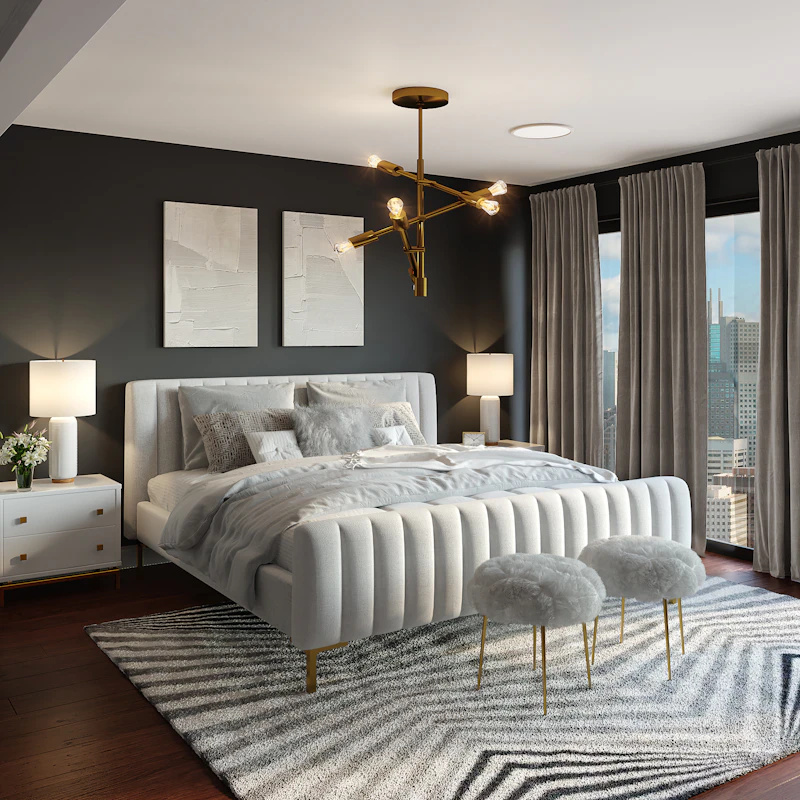
An arched mirror + a slim console table = the fastest way to make any open door feel like a proper foyer.
Idea No. 13
Seasonal Décor Keeps the Entryway Zone Fresh Year-Round
One thing top-performing Pinterest pins understand that most homeowners don’t: your entryway that opens into the living room is actually a seasonal decor opportunity. Swap in a pumpkin and a wreath in fall, fresh greenery and a candle in winter, a vase of branches in spring, and a linen-toned neutral setup in summer. The entryway zone naturally gets refreshed with every season change, which keeps it feeling intentional rather than like a forgotten afterthought. It’s also a Pinterest evergreen play — your content stays relevant every time of year.
Idea No. 14
A Glass or Rattan Room Divider for Renters
Can’t put holes in walls? Won’t be here long enough for a full renovation? A freestanding room divider that’s light, open, and easy to relocate might be your absolute best friend. Glass panel dividers with slim metal frames give a sleek, modern feel and let light pass through freely. Rattan or bamboo folding screens bring bohemian warmth and cost next to nothing at thrift stores. Position it at an angle between the door and the seating area — it doesn’t need to span the full width of the room to be effective. Even a partial divider creates the visual cue of separation.
Idea No. 15
Build a Pony Wall (or Fake One With Furniture)
If you do own your home and want the most permanent, architectural solution available, a pony wall — a short half-wall, typically 36–42 inches high — built at the transition between the door area and the living room creates a true foyer definition. For those who want the look without the construction, a long, low bookcase, a row of matching storage cubes, or even a credenza positioned perpendicular to the entryway achieves the same visual effect. This is the most structural-feeling of all the non-structural solutions, and it photographs beautifully for real estate listings too.
📚 200+ Room-by-Room Decor Ideas — One Download Away
Every single idea in this post, and 185 more like it, are organized, explained, and beautifully illustrated inside THE ALL-IN-ONE HOME DECOR BIBLE. It’s the guide that lets you finally stop guessing and start decorating with confidence. Don’t wait — grab it now while it’s available.
Frequently Asked Questions
How do you separate an entryway from the living room without a wall?
Use a combination of an area rug to anchor each zone, furniture placement (like a sofa with its back toward the door), and a console table or bench as a visual marker. You don’t need a wall — you need intentional furniture and light cues.
What’s the best rug size for an entryway that opens into the living room?
For the door zone, a 2×3 or 3×5 doormat or flat-weave rug works well. For the living room anchor rug, go as large as your furniture allows — typically 8×10 or bigger for standard living rooms. The gap between the two rugs visually separates the zones.
Can I create a foyer feeling without spending a lot of money?
Absolutely. A $40 doormat, a secondhand console table, a coat hook rail, and a mirror can completely transform the entry experience for under $200 total. The design “rules” matter more than the price tags.
What furniture should go directly inside the front door?
At minimum: a rug, a surface for daily drops (console table or bench), and a hook for bags or coats. If space allows, add a mirror, a small lamp, and a basket or tray to contain clutter. Think about the five things you touch every time you walk in the door — design around those.
Is it okay to put a sofa with its back to the door?
Yes — and interior designers actually recommend it for homes without a formal foyer. It creates a natural entry zone, defines the living room, and gives the back of the sofa a design purpose. Style that back with a throw or a tray of decor to make it feel intentional.
🛒 Ready to Shop the Look? Browse all the top-rated entryway finds on Amazon — console tables, hall trees, rugs, mirrors, hooks, and room dividers all in one place. Filter by Prime shipping and get your entryway sorted by the weekend.
⬡ Quick Decor Card
Entryways That Open Into the Living Room: Your Go-To Styling Guide
The fast-reference card for every trick, tool, and Amazon find you need to make your open-door layout work beautifully.

📖 Want the Full 200+ Room Guide?
Get THE ALL-IN-ONE HOME DECOR BIBLE — instant download, every room covered. ⚡ Limited time access.
Get THE ALL-IN-ONE HOME DECOR BIBLE — instant download, every room covered. ⚡ Limited time access.
🎯 The 5 Zones Every Open-Door Entryway Needs
1
Drop Zone — A surface for keys, mail, and the daily dump. Console table, shelf, or tray on the bench top.
2
Shoe & Coat Storage — Hooks, a hall tree, or a bench with hidden cubbies. Keep it contained, keep it close to the door.
3
Visual Anchor — A rug or light fixture that clearly marks the entry territory. The eye needs a cue.
4
Zone Separator — Something that signals “entry ends here”: a sofa back, a low bookcase, a slat divider, or a pony wall.
5
Personality Piece — A mirror, a plant, a piece of art. Something that says this is a designed space, not just a door.
🛒 Top Amazon Finds for This Look
→
Narrow Console Table — fits behind the sofa or beside the door; under 15″ deep
→
Hall Tree With Storage Bench — hooks + seat + shoe storage, all in one slim footprint
→
Arched Floor Mirror — the most-saved home decor buy on Amazon right now
→
Natural Jute Entry Rug — durable, easy clean, works in every style
→
Wood Slat Room Divider — the Pinterest-worthy look that doesn’t block light
📚 Read the full post for all 15 ideas with styling details →
Scroll back up to the blog post for the full breakdown, pro tips, and before-you-start checklist.
Scroll back up to the blog post for the full breakdown, pro tips, and before-you-start checklist.
Affiliate Disclosure: This post contains Amazon affiliate links using the tag emivic-20. As an Amazon Associate, I earn from qualifying purchases at no extra cost to you. All product recommendations are based on genuine usefulness and design quality. Thank you for supporting this blog!